Nils Roth · 20 October 2026
How Confidentiality Mandates Reshape Workload Distribution in Anonymous System Transitions
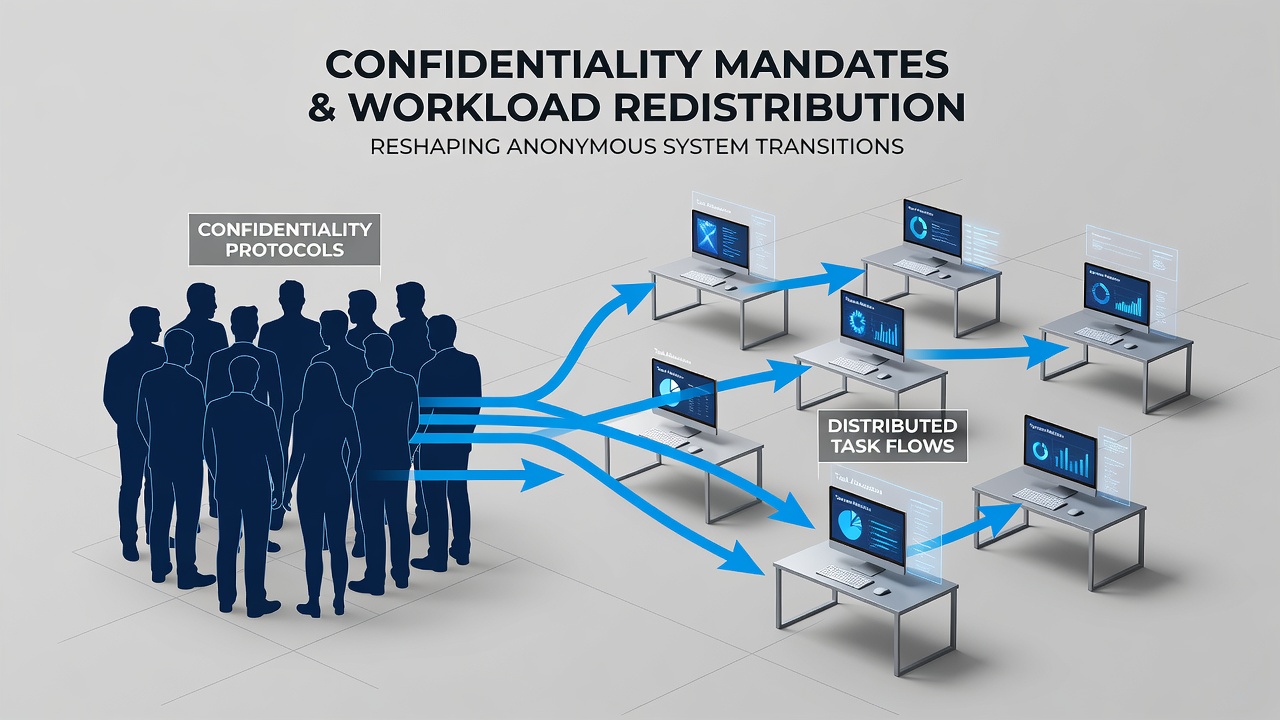
Confidentiality mandates require organizations to protect user identities during system transitions, and this requirement directly influences how tasks get assigned across technical teams. Researchers have documented that these rules often force a redistribution of responsibilities so that no single group holds complete access to identifiable data at any stage. Data from multiple industry reports shows that teams handling anonymous platforms must split encryption duties, audit processes, and migration monitoring among separate units to maintain compliance.
Core Elements of Confidentiality Requirements
Confidentiality mandates typically stem from regulations that govern data handling in sectors such as healthcare, finance, and public services, and these rules specify strict limits on who can view or process information during upgrades. According to guidance issued by the National Institute of Standards and Technology, organizations must implement separation of duties when migrating systems that store or process anonymized records. This separation means one group manages key generation while another handles data mapping, and yet a third group verifies that outputs remain unlinkable to original sources.
Observers note that such divisions become especially pronounced when platforms transition between infrastructure providers or software versions, because each phase introduces new points where identity leakage could occur. Studies conducted by academic groups in Canada and the European Union have tracked how these mandates extend project timelines yet reduce the concentration of knowledge in any one location.
Mechanics of Anonymous System Transitions
Anonymous system transitions involve moving data and services from one environment to another while preserving the property that no party can reconstruct user identities from the transferred records. The process usually includes re-encryption of datasets, replacement of identifiers with cryptographic tokens, and validation that linkage attacks remain infeasible. Teams must coordinate these steps without consolidating all necessary credentials in a single control point, which alters traditional project structures.
In October 2026 several regulatory updates are scheduled to take effect across multiple jurisdictions, and these changes are expected to tighten requirements for audit trails during such transitions. Organizations that operate large-scale anonymous networks have already begun reallocating staff to meet the anticipated documentation demands.
Redistribution of Tasks Under Mandate Pressure
Workload distribution changes when confidentiality rules prohibit any individual from accessing both raw identifiers and the final anonymized output. Project managers therefore assign encryption specialists to early phases, compliance officers to intermediate checks, and independent reviewers to final validation. This segmentation prevents single points of failure but requires additional coordination meetings and shared logging systems.
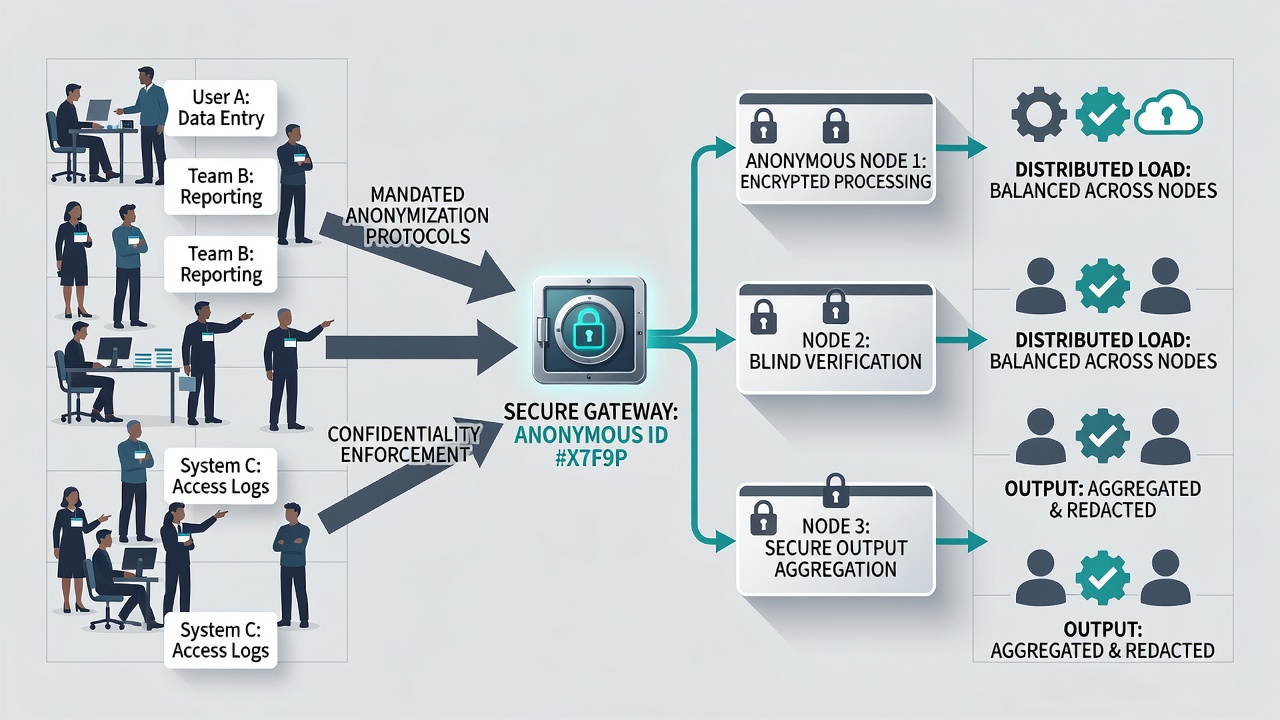
Evidence from European Data Protection Board case summaries indicates that organizations adopting this model report higher numbers of cross-team handoffs yet fewer incidents of unauthorized access. The same summaries note that training programs now emphasize role isolation rather than end-to-end system mastery, shifting professional development priorities accordingly.
Observed Patterns in Resource Allocation
Allocations of personnel and computational resources follow predictable patterns once confidentiality constraints are applied. Early stages receive heavier investment in cryptographic tooling and key-management personnel, while later stages emphasize monitoring and incident-response staffing. Research papers published by Australian universities have quantified these shifts by measuring hours spent on each sub-task before and after mandate enforcement.
Teams that previously operated with fluid role boundaries now maintain clearer demarcation lines, and this clarity reduces overlap yet increases the total number of documented checkpoints. Data compiled by trade associations in North America shows a measurable increase in the use of temporary specialist contractors during transition windows to cover gaps created by the new distribution model.
Adaptations Across Different Organizational Scales
Larger organizations tend to create dedicated sub-teams for each confidentiality-controlled function, whereas smaller entities rely on rotating assignments among existing staff. Both approaches produce similar outcomes in terms of workload fragmentation, although the administrative overhead differs. Reports from research institutions in Asia have compared these models and found that rotation schedules help maintain institutional knowledge without violating access restrictions.
Technical tools such as secure multi-party computation and threshold cryptography further support the redistribution by allowing multiple parties to contribute to a task without any one party seeing the complete dataset. Adoption rates for these tools have risen steadily, according to figures released by international standards bodies.
Conclusion
Confidentiality mandates continue to drive measurable changes in how organizations assign and sequence work during anonymous system transitions. The resulting structures emphasize separation of duties, increased documentation, and specialized tooling, and these elements appear consistently across regions and organizational sizes. As new regulatory deadlines approach in October 2026, further refinements to workload distribution models are anticipated based on ongoing compliance requirements.