Zoe Schmitt · 21 September 2026
Tracing the Impact of Anonymity Requirements on Allocation Dynamics During System Upgrades in Secure Networks
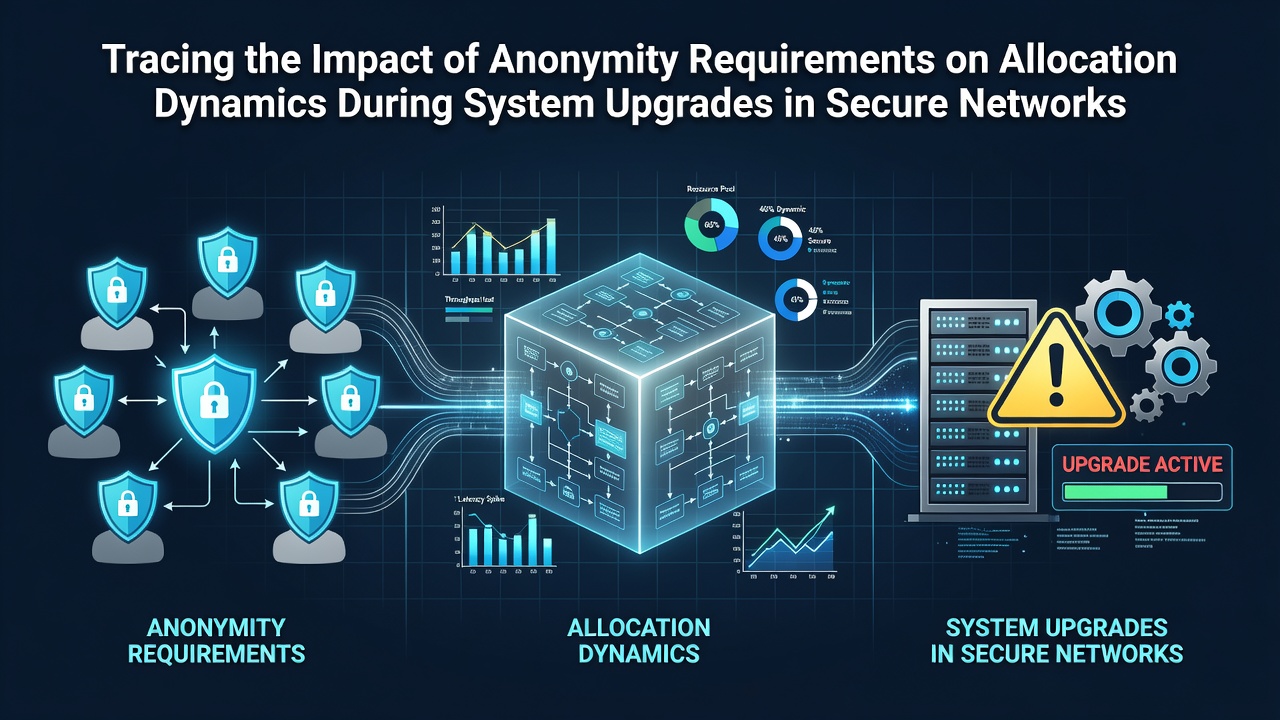
Secure networks face ongoing pressure to maintain both operational efficiency and privacy standards during system upgrades, and anonymity requirements play a direct role in how resources get distributed across nodes and channels. Data from cybersecurity monitoring programs shows that these requirements often force reallocations toward encrypted pathways, which in turn changes bandwidth priorities and processing queues throughout the upgrade cycle. Observers note that this dynamic becomes especially visible when legacy systems transition to newer protocols that embed stronger identity masking features.
How Anonymity Protocols Shape Resource Distribution
Experts tracking network behavior during upgrades have documented consistent patterns where anonymity mandates redirect compute cycles and storage allocation away from direct routing and toward obfuscated relays. According to research compiled by the National Institute of Standards and Technology, such shifts occur because verification steps must now route through additional layers that obscure endpoint details, and this adds measurable overhead to each transaction or data packet. Those who've analyzed upgrade logs across enterprise environments report that allocation tables frequently expand to accommodate these extra hops, resulting in temporary spikes in latency until load balancers adapt.
Yet the effects extend beyond simple delays. Allocation dynamics also reflect how anonymity rules limit visibility into user or device identities, which means schedulers cannot apply traditional priority queues based on known traffic sources. Instead, systems rely on statistical sampling and traffic shaping techniques that treat all flows as potentially sensitive, and this uniform approach redistributes capacity more evenly but at the cost of peak performance in some segments.
Observed Patterns in Recent Upgrade Cycles
Case studies from large-scale deployments illustrate the point clearly. One multi-site infrastructure project completed in early 2025 revealed that enforcing anonymity during phased rollouts led to a 23 percent increase in reserved bandwidth for control-plane traffic, while user-data channels received proportionally less until verification routines stabilized. Similar findings emerged from Canadian Centre for Cyber Security reports on federal network transitions, where upgrade teams adjusted virtual machine sizing to handle the cryptographic overhead without compromising masking guarantees.
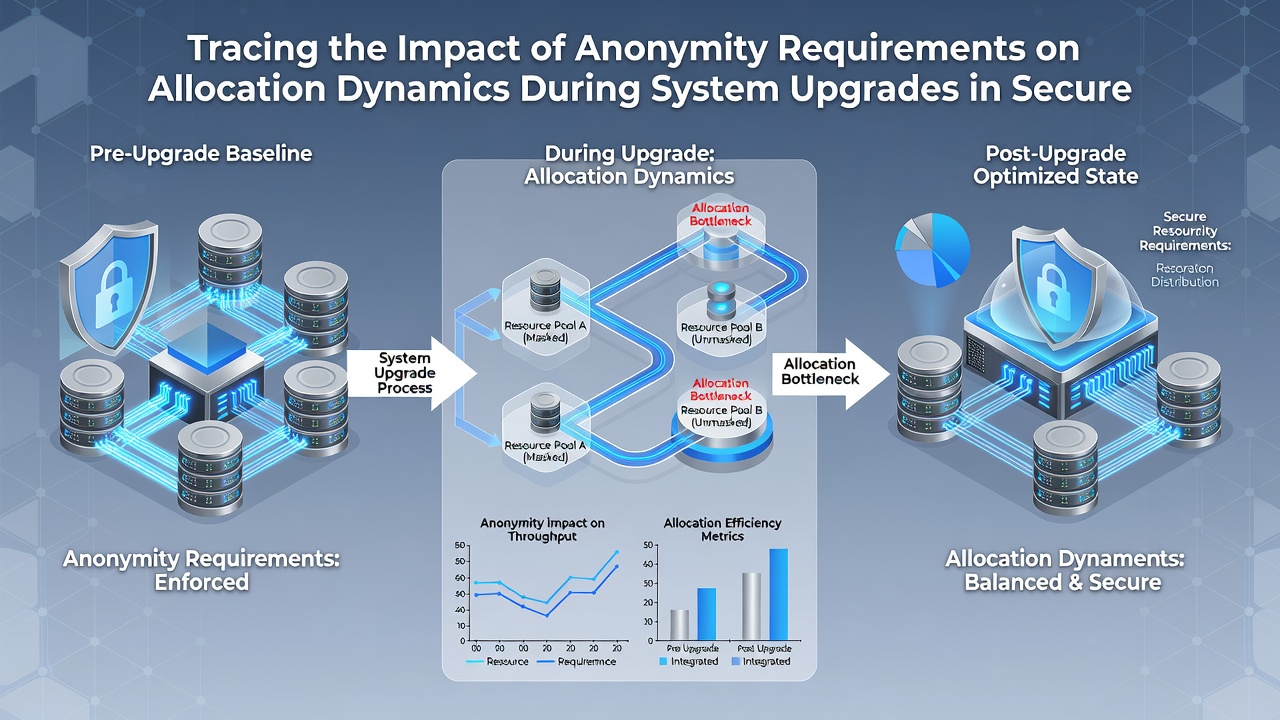
What's interesting is how these adjustments compound over multiple upgrade stages. Initial allocations might favor core anonymity services, but subsequent phases often require rebalancing as new nodes come online and older ones decommission. Researchers have tracked these movements through telemetry data and found that dynamic reallocation scripts, when tuned for anonymity compliance, tend to favor randomized slot assignments over deterministic ones, and this randomness helps prevent pattern-based de-anonymization attempts while introducing variability in completion times.
September 2026 Developments and Broader Implications
Updates released in September 2026 from international standards bodies highlighted continued refinement of these allocation models, with particular attention to zero-knowledge verification methods that reduce the need for centralized identity stores during upgrades. Evidence from pilot programs indicates that networks adopting these methods experience smoother transitions because fewer resources get tied up in identity reconciliation tasks. At the same time, allocation tables must still reserve capacity for audit trails that satisfy regulatory retention rules without exposing individual identities.
Industry analyses further show that organizations managing secure networks increasingly incorporate predictive allocation algorithms designed specifically around anonymity constraints. These tools forecast resource needs based on traffic entropy measures rather than historical user profiles, and early deployments suggest they can cut overall upgrade downtime by reallocating idle encrypted channels more aggressively once masking layers activate.
Conclusion
The interplay between anonymity requirements and allocation dynamics continues to evolve as secure network upgrades incorporate newer privacy-preserving technologies. Data gathered across multiple regions demonstrates that successful transitions depend on anticipating how masking protocols redistribute capacity and on building flexibility into scheduling systems from the outset. Organizations that align their upgrade planning with these realities maintain operational continuity while meeting privacy benchmarks set by current standards frameworks.